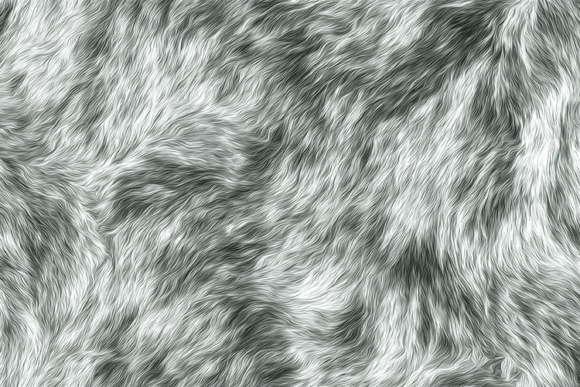
Mastering the Realistic Grey Fur Seamless Texture for Professional Design
In the realm of digital asset creation, the quality of a texture often dictates the perceived value of the final project. A Realistic Grey Fur Seamless Texture serves as more than just a background element; it is a foundational component that can elevate fashion mockups, enhance 3D modeling realism, and add tactile depth to graphic compositions. With dimensions of 5824 x 3264 pixels, this specific high-resolution JPG file offers a level of detail that is critical for print-ready workflows. Unlike lower-resolution alternatives that blur under magnification, this asset maintains its integrity across large formats, ensuring that every strand of fur contributes to a cohesive and natural aesthetic.
The Technical Foundation of High-Resolution Textures
Understanding the technical specifications of a texture file is the first step in leveraging its full potential. The Realistic Grey Fur Seamless Texture provided here is optimized for professional use, boasting a resolution of 5824 x 3264 pixels. In the context of digital design, pixel density is paramount. When a texture is intended for large-scale printing, such as posters, banners, or fabric swatches, insufficient resolution leads to pixelation and a loss of detail. This specific file size ensures that when printed at standard industry resolutions (typically 300 DPI), the output remains crisp and sharp.
The "seamless" attribute is equally critical. A seamless texture allows designers to tile the image repeatedly without visible edges or discontinuities. This is achieved through careful edge matching during the creation process, where the left side of the image aligns perfectly with the right, and the top aligns with the bottom. For a fur pattern, this continuity is essential because the human eye is highly sensitive to breaks in organic patterns. A non-seamless fur texture would create artificial lines that disrupt the illusion of a continuous surface, whereas a truly seamless grey fur texture creates an infinite field of softness.
File Format Considerations: Why JPG Works Here
While many professionals debate between PNG, TIFF, and JPG formats, the choice of a high-quality JPG for this texture is strategic. JPG files utilize compression that is generally imperceptible on complex, noisy textures like fur. Because fur consists of thousands of varying shades of grey and subtle gradients, the compression artifacts common in JPGs are masked by the natural noise of the fibers. This results in a manageable file size that loads quickly in design software while retaining the visual fidelity necessary for high-end applications. However, for archival purposes or extreme editing, users may consider converting the file to a lossless format, though the original JPG is fully print-ready as supplied.
Applications in Fashion and Textile Design
The fashion industry relies heavily on realistic textures to visualize materials before physical production. A Realistic Grey Fur Seamless Texture is an invaluable tool for textile designers creating digital swatch books. By applying this texture to garment templates, designers can simulate the look of faux fur coats, linings, and accessories with remarkable accuracy. The neutral grey tone is particularly versatile, acting as a sophisticated base that complements a wide range of color palettes without overpowering them.
In digital scrapbooking and craft design, this texture adds a layer of luxury and warmth. It can be used to create backgrounds for photo albums, greeting cards, and invitations. The softness implied by the fur pattern evokes feelings of comfort and nostalgia, making it ideal for projects centered around family memories or seasonal themes. When combined with other elements like typography or photographs, the grey fur provides a rich canvas that enhances the overall composition without competing for attention.
Enhancing 3D Modeling and Environmental Art
For 3D artists and game developers, the demand for photorealistic materials is relentless. Standard procedural shaders often struggle to replicate the chaotic yet structured nature of animal fur. Using a high-resolution image map like this Realistic Grey Fur Seamless Texture allows artists to achieve a higher degree of realism in their renders. The 5824 x 3264 pixel dimension ensures that even in close-up camera shots within a virtual environment, the texture does not degrade.
This texture can be utilized in various ways within a 3D workflow:
- Diffuse Maps: Providing the base color and pattern of the material.
- Bump or Normal Maps: Converting the grayscale values of the fur into height information to simulate the physical volume of individual strands.
- Roughness Maps: Defining how light interacts with the surface, allowing some areas of the fur to appear softer and others more reflective based on the lighting conditions.
When applied to character models, such as fantasy creatures or animals in simulation games, this texture brings a level of biological plausibility that simple colors cannot achieve. The variation in the grey tones helps to break up the silhouette and adds depth, making the model feel tangible rather than flat.
Strategic Use in Graphic Design and Branding
Beyond the realms of fashion and 3D, graphic designers can leverage this texture to create unique branding assets. In a market saturated with flat vector graphics and minimalist designs, introducing a tactile element like fur can make a brand stand out. Posters, album covers, and book jackets benefit from the organic complexity of a Realistic Grey Fur Seamless Texture. It suggests quality, warmth, and a connection to nature.
Consider a marketing campaign for a winter clothing line or a pet care product. Using this texture as a backdrop immediately communicates the theme without the need for excessive text. The grey hue is neutral enough to allow bold typography to pop, yet textured enough to prevent the design from feeling sterile. Designers can also manipulate the opacity and blending modes of the texture to create subtle overlays, adding a sense of grit or softness to corporate presentations and annual reports.
Color Theory and Visual Harmony
Grey is often misunderstood as a dull color, but in texture design, it is a powerhouse of neutrality. The specific shade of grey found in this seamless texture acts as a perfect bridge between warm and cool tones. It can harmonize with earthy browns and greens for a naturalistic look, or contrast sharply with neon accents for a modern, edgy aesthetic. This versatility makes it a staple in any designer's library. Furthermore, the monochromatic nature of the texture allows it to recede into the background when needed, serving as a subtle support for primary content, or come forward as the main focal point when paired with solid, contrasting colors.
Workflow Integration and Best Practices
Integrating a high-resolution texture into a creative workflow requires attention to detail. When working with a file of 5824 x 3264 pixels, performance can become a consideration depending on the hardware and software being used. To maintain efficiency, designers should utilize proxy images or lower-resolution previews during the initial layout phase, switching to the full-resolution Realistic Grey Fur Seamless Texture only for the final export.
Proper scaling is another crucial factor. While the texture is seamless, stretching it too far can distort the scale of the fur strands, making them look unnatural. It is important to match the scale of the texture to the real-world object it represents. For instance, if designing a coat, the fur strands should be sized proportionally to the garment. If the texture is applied to a small icon, it may need to be downsampled to avoid overwhelming the design with unnecessary detail.
Furthermore, color correction tools should be used judiciously. While the grey tone is versatile, adjusting the saturation or brightness can alter the mood significantly. Desaturating further can create a stark, industrial feel, while warming the grey slightly can evoke a vintage or cozy atmosphere. Understanding these nuances allows creators to adapt a single asset to multiple contexts, maximizing its utility.
The Value of Print-Ready Assets in Modern Production
In an era where digital-first strategies dominate, the importance of print-ready files remains undeniable. Physical products still require high-fidelity source files to ensure quality reproduction. The Realistic Grey Fur Seamless Texture meets the rigorous standards required for commercial printing. Whether it is for offset printing on paper goods or sublimation on fabrics, the clarity of the 5824 x 3264 pixel image ensures that the final product matches the digital proof.
Printers and manufacturers appreciate assets that do not require additional upscaling or cleanup. A texture that is already optimized for print reduces the risk of errors in the production pipeline. It saves time and resources, allowing businesses to move from concept to market more efficiently. For hobbyists and educators, having access to such high-quality resources democratizes the ability to produce professional-grade work, bridging the gap between amateur and professional outputs.
Future Trends in Texture Utilization
As technology advances, the application of realistic textures is expanding into new frontiers. Virtual reality (VR) and augmented reality (AR) experiences demand increasingly detailed environments to maintain immersion. A high-resolution fur texture like this one will play a significant role in creating believable virtual worlds. Additionally, the rise of AI-driven design tools means that base textures are becoming the raw material for generative art, where algorithms can modify and combine textures to create entirely new patterns.
The enduring appeal of natural textures lies in their ability to connect with human senses. Even on a screen, a well-executed fur texture triggers a psychological response associated with touch and comfort. As long as design continues to strive for emotional resonance and authenticity, assets like the Realistic Grey Fur Seamless Texture will remain indispensable. They represent the intersection of technical precision and artistic expression, offering a reliable foundation upon which countless creative visions can be built.